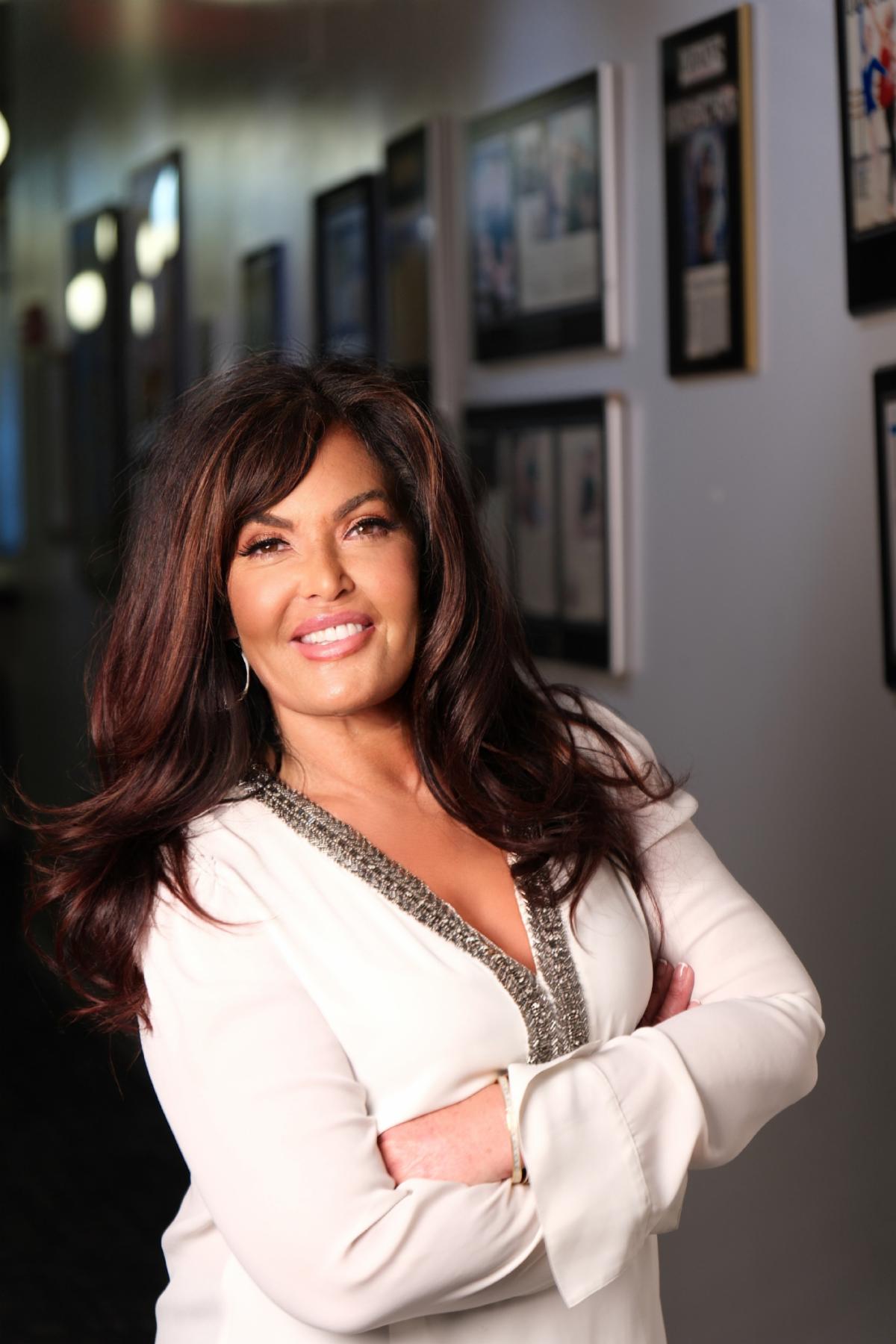
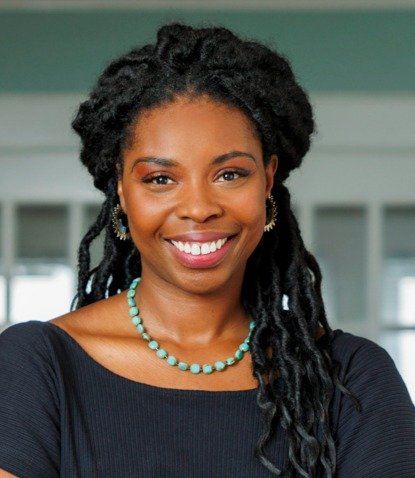
Multicultural Marketing News March 2026 March is Women’s History Month Meet the women leaders from the Expert companies featured on multicultural.com. Click on each photo below to learn about each company/organization in our online Source Book of Multicultural Experts directory and Speakers Showcase or to contact them directly. In this issue - Celebrating Female Farmers (Ethnic Technologies)
- We’ve Come a Long Way, Baby— But the Best is Yet to Come (INFUSION by Castells)
- Do Your Marketing Personas Recognize that Women are Business Owners? (Ebony Marketing Systems)
- Women’s Sports Are Not a Moment—They’re a Movement (Horowitz Research)
- Where Community Meets Commerce (NRS Digital Media)
|
|
Celebrating Female Farmers Since 1987, Women’s History Month has been celebrated during the month of March. This year, Women’s History Month coincides with the United Nation’s International Year of the Woman Farmer (2026). The focus of which is to draw attention to the impact of female farmers and work towards more access for their success moving forward. In the United States, women “farm or co-farm 43 percent” of farmland. According to Women in Agribusiness, there are 1.2 million women farmers. They are responsible for 222 billion dollars in agricultural sales and work 407 million acres of farmland in the US. The number of female farmers continues to rise while the number of male farmers has been decreasing since 2007. Women in Agribusiness also points out that there are differences in geographic location and what is being farmed based on gender in the United States. Women are more likely to be farmers in the Northeast and Western United States. Arizona is the state with the most female farmers. Women farmers are also more likely to farm livestock along with specialty crops and less likely to farm “large-scale commodity farming” including oilseed, grains, cotton, and tobacco. An article by Pilgeran, Dentzman, and Lewin discusses the racial breakdown of female farmers in the United States. Most female farmers in the US identify as white women making up 95% of total women farmers. Black women and Indigenous women make up most of the remaining 5 percent and are mainly located in the Texas/ Southeastern US area, and the Arizona/ Southwest area, respectively. Female Farmers are a growing group that is essential to food production. They are more likely to use sustainable practices and to reinvest in their communities. Use E-Tech 2026 to help you find, support, and celebrate female farmers in your client base. By Jessica Wilhoit, Product Design Analyst, Ethnic Technologies, jwilhoit@ethnictechnologies.com. View company profile here. |
We’ve Come a Long Way, Baby— But the Best is Yet to Come When I was a teenager, I challenged my junior high school so girls could wear pants. I burned bras in protest for women’s rights. And when I entered corporate America, the few women in the room weren’t executives—they were secretaries. A pinch in the ass, harassment, and unnecessary setbacks were considered “the norm.” That wasn’t ancient history. It was my lifetime. My business partner Leticia Juarez, fifteen years younger, still faced discrimination, lewd remarks, and assumptions about her capabilities. We both refused victimhood and made it clear we meant business—turning every “no” into “how.” Today women run companies and influence every corner of the economy. Women now make up more than half of the college-educated workforce, and the share working in the highest-paying professions has nearly tripled since 1980. So yes — we’ve come a long way, baby. But the fight didn’t end. It evolved. Women still earn about 80 cents for every dollar earned by men. Only about 11 percent of Fortune 500 CEOs are women—and only three have ever been Latinas. Where I see tremendous momentum is among Latina leaders. With over 31 million U.S. Latinas and $1.3 trillion in economic output, their influence is accelerating. Latinas also run two million businesses generating over $175 billion in revenue, make up over half of Hispanic-owned businesses, and the fastest growing of any segment. Latinas are builders. Powerhouses with purpose—launching companies, creating jobs, supporting families, and strengthening communities. Yet Latinas still earn only 52-cents for every dollar earned by white non-Latino men, and 64-cents for every dollar among top executives. Progress and inequality still exist side by side. The next chapter of women’s equality will be shaped by forces like ethical AI, digital safety, economic resilience, and leadership equity. As technology reshapes industries, diverse leadership will be essential to ensure these systems are designed fairly—not reinforcing the biases women have spent decades dismantling. Progress happens when women stop asking permission and start changing the rules—with men as vocal allies. Leticia and I are proud to run one of the country’s top multicultural agencies alongside leaders like Daisy Expósito-Ulla and Ingrid Otero-Smart, while honoring pioneers such as Tere Zubizarreta, Norma Orcí, and Alicia Conill—the madrina of Hispanic advertising–-whom I had the privilege to work with. Women aren’t just earning a seat at the table. We’re building new tables. Yes, we’ve come a long way, baby. But we’re not done. The best chapters are yet to come. By Liz Castells-Heard, Founder, CEO and Chief Strategy Officer, INFUSION by Castells, liz@adcastells.com. View company profile here. |
|
Do Your Marketing Personas Recognize that Women are Business Owners? Personas are a common approach to developing strategy, creative execution and media targeting. As both a woman business owner and marketing research leader, I invite you to take closer look at your personas: - Do your female personas own a business? 4 in 10 all U.S. businesses are owned by women per the “Wells Fargo 2026 The Impact of Women-Owned Business” report
- Do your women-of-color personas own a business? Almost half of all women-owned businesses are owned by women of color with the majority owned by Black or Latina women. 57% of women currently taking steps to business ownership are women of color.
Why does women business ownership matter? Owning a business is not only a significant economic demographic component of a woman’s identify but also reveals motivations and goals that can be the basis of successful marketing messages. Women business owners shared in the Wells Fargo report that: - 75% want to be their own boss
- 62% want to work according to their schedules
- 45% are motivated by building generational wealth for their families
In this Women’s History Month, absolutely let’s acknowledge women’s historical progress (in 1972 women owned just 4.6% of U.S. businesses), but also acknowledge today’s women. If you’re ready to understand more about the real women behind these numbers, talk with EMS leadership: Kai K. Fuentes, Founder and President kfuentes@ebonysystems.com or Rose Isaguirre-San Jose at risaguirre@ebonysystems.com. By Kai Fuentes, CEO and President, Ebony Marketing Systems, kfuentes@ebonysystems.com. View company profile here. |
|
Women’s Sports Are Not a Moment—They’re a Movement Women’s History Month is a time to honor the trailblazers who fought for rights, representation, and equality. Their work laid a powerful foundation—but there is still progress to be made. One space where that momentum is especially visible is professional sports. Women’s sports aren’t just experiencing a viral moment because of Team USA’s Olympic gold in women’s hockey; support and visibility are growing across the board. From the growing spotlight on female Olympic champions to the excitement building toward the 2027 Women’s World Cup, women athletes are commanding more attention. They’re appearing on major platforms like Saturday Night Live and The Tonight Show, building passionate fan bases, and attracting more brand and sponsor investments. We are seeing more primetime distribution, broader media coverage, and continued conversations around pay equality and opportunity. While equity in sports remains a work in progress, we are moving in the right direction. At Horowitz our studies cover sports viewing and fanhood, including women’s sports. For example, our report, State of Media, Entertainment, and Tech: Advertising in a Digital World shows that 20% of sports viewers follow the WNBA, higher than the NHL and golf. The significance of the USA Women’s Olympic gold medal hockey team extends beyond impressive viewership. Their achievement amplifies women’s narratives on a national stage, reflecting how women’s sports are becoming fully integrated into the mainstream sports landscape. As we celebrate Women’s History Month, the hope is that this momentum carries beyond athletics—signaling that the gaps in equality across all sectors continue to narrow. By Adriana Waterston, EVP and Insights & Strategy Lead, Horowitz Research, A Division of M/A/R/C Research, adrianaw@horowitzresearch.com. View company profile here. |
|
Where Community Meets Commerce Women’s economic influence is often measured through their purchasing power. In many communities, they are also building the businesses where those purchases happen. According to the U.S. Census Bureau, women own 14.2 million businesses, generating roughly $2.8 trillion in annual receipts. Much of this growth is being driven by multicultural women. Research from the National Women’s Business Councilshows that Black women own more than 2 million businesses generating $98 billion in revenue, while Latina entrepreneurs operate over 2 million firms producing roughly $175 billion annually. These businesses are woven into the fabric of their communities, serving as trusted commerce points, cultural touchstones, and local economic engines. That dynamic matters in a marketplace where small businesses make up more than 99% of U.S. companies, shaping the neighborhood retail environments where many consumer decisions are made. Multicultural women are influencing the marketplace from multiple directions at once: as consumers, entrepreneurs, and community connectors. Together, those roles offer a clearer view of how commerce is evolving. They shape local economies not only through what they buy, but through the businesses they build and the communities they serve. For anyone trying to understand the future of the marketplace, the intersections of culture, entrepreneurship, and everyday commerce are increasingly where the most meaningful signals can be found. By Christina Grommon, Senior Manager of Strategy, NRS Digital Media, christina.grommon@nrsplus.com. View company profile here. |
|
| Would you like to see your company POV featured in our next theme newsletter? If you are interested in including your paragraph and logo in our next issue of Multicultural Marketing News/MMRNews ($425), please visit here for more information or sign up here or contact Lisa Skriloff at 212-242-3351 or Lisa@multicultural.com. Participation is free to organizations featured on multicultural.com. Sign up here to feature your organization/company on multicultural.com. Next Issues: March 2026 Newsletter Save the Dates for Key 2026 Multicultural & Diversity Conferences + events Deadline for reservations: March 16th Deadline for copy: March 19th To participate in any of the upcoming newsletters order your Featured Event Listing here April 2026 Newsletter Multicultural Communications Month Deadline for reservations: April 8th Deadline for copy April 14th Create your Listing and Order here View last year’s issue here Multicultural Marketing News – April is Multicultural Communications Month Save the Dates for Key 2026 Multicultural & Diversity Conferences + events Deadline for reservations: April 10th Deadline for copy: April 14th To participate in any of the upcoming newsletters order your Featured Event Listing here For more info about participating in this newsletter email Lisa@multicultural.com. To see upcoming newsletters view our 2026 Editorial Calendar. Weekly and monthly banner sponsorships of the newsletter and stand-alone eblasts to our subscriber list are available. To learn more about newsletter advertising visit here and for all advertising opportunities visit here. Need more info? Visit here or email Lisa@multicultural.com or call 212-242-3351. |
|
| About This Newsletter Multicultural Marketing News (MMRNews), is a free e-mail newsletter published by Multicultural Marketing Resources, Inc. (MMR) and sent to approx 7,000 subscribers. For a free subscription, sign up here. |
|
|
|
|